Systems, not features
Features are outputs. Systems are the product. How a single question changes what gets built — and why our products are designed as one connected ecosystem.
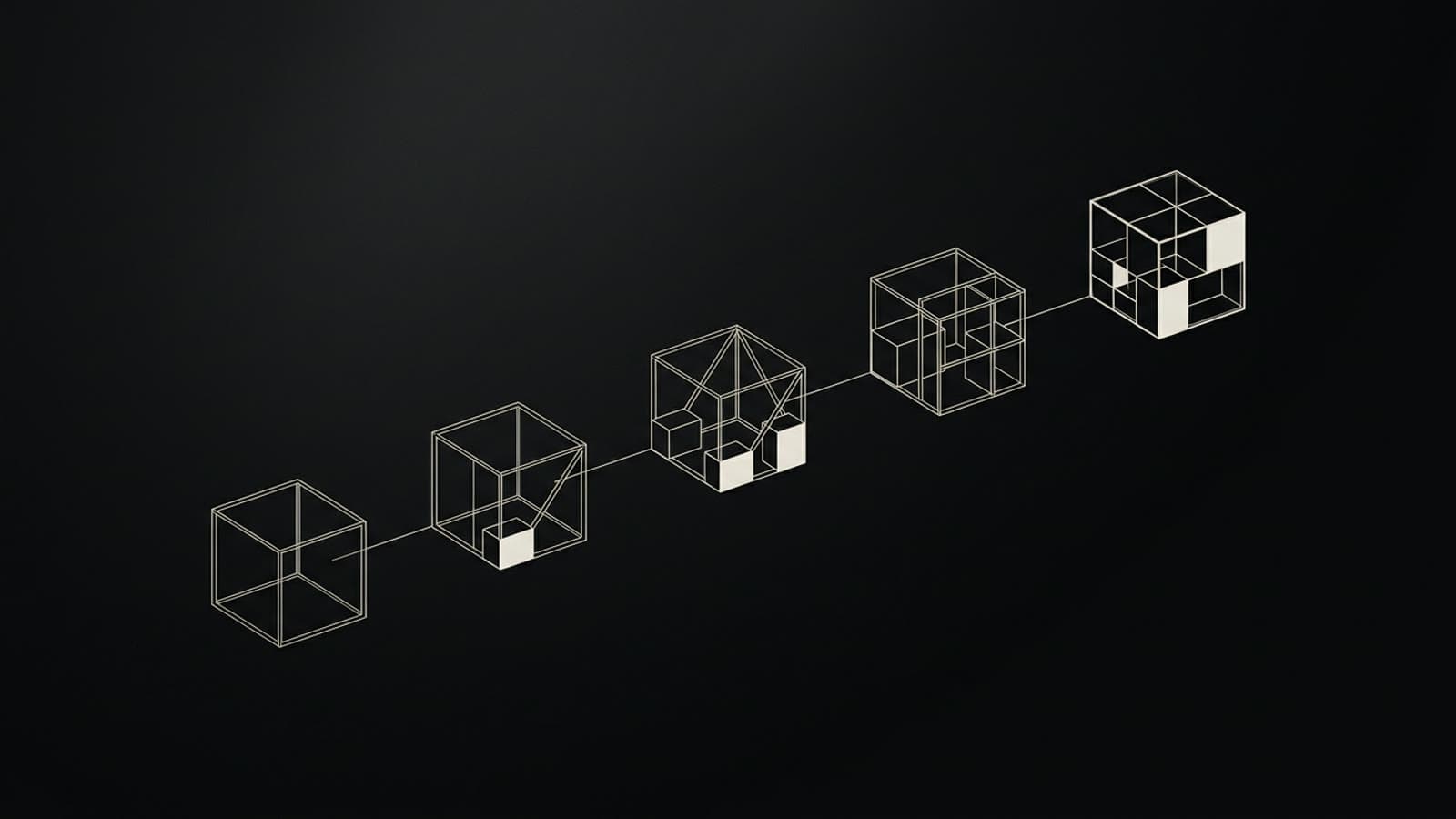
Every product conversation eventually arrives at the same question: what feature should we build next?
We think it's the wrong question. Not because features don't matter, but because the question skips the step where the real decisions live. The question we ask instead: what system are we redesigning?
Features are outputs
A feature is the visible end of a chain of assumptions — about what the user is doing, why they're doing it, and what surrounds the task. Build features without examining the chain and you get software that mirrors the existing mess: a button for every workaround, a setting for every disagreement, a dashboard for every anxiety.
That's how interfaces become crowded and products become heavy. Complexity that was never resolved gets shipped to the user as choice.
Start from the system instead, and features stop being a wishlist. They become consequences — the small visible surface of a structure that was designed to hold.
One lifecycle, one design
Look at the life of a business as a system, and it has a shape:
- Value has to be understood — what do you know, what can you offer, what is it worth?
- Value needs structure — a real business that can operate.
- Structure needs presence — the world has to be able to find you.
- Presence needs operations — the business has to run, daily, without consuming its owner.
- Operations produce value to be exchanged — the point of the whole exercise.
Most tools serve one slice of this lifecycle and treat the rest as someone else's problem. The hand-offs between slices — where the data doesn't follow, the context is lost, and the person starts over — are where momentum goes to die.
We design for the hand-offs. Each system we build is complete on its own, but each one deliberately creates the foundation the next one requires. Understanding feeds structure. Structure feeds presence. Presence feeds operations. That's why our products form an ecosystem rather than a portfolio — the relationships between them are designed, not incidental.
The discipline this demands
Designing systems instead of features is slower at the start. It means researching before building. It means telling yourself no when a popular feature doesn't belong to any coherent system. It means shipping less surface than competitors and more structure than anyone can see in a screenshot.
It also produces a different kind of product — one where the pieces make more sense together, where each release strengthens the whole, and where a user's effort compounds instead of fragmenting across disconnected tools.
Features are easy to copy. Systems are not. That asymmetry is the entire strategy.